Wave Is Now Native on iPhone and Android
We rebuilt the Wave mobile app from the ground up in Swift and Kotlin, the native languages of iPhone and Android. It's live now on both. Same features, same account, same recordings. It just feels the way an app should.
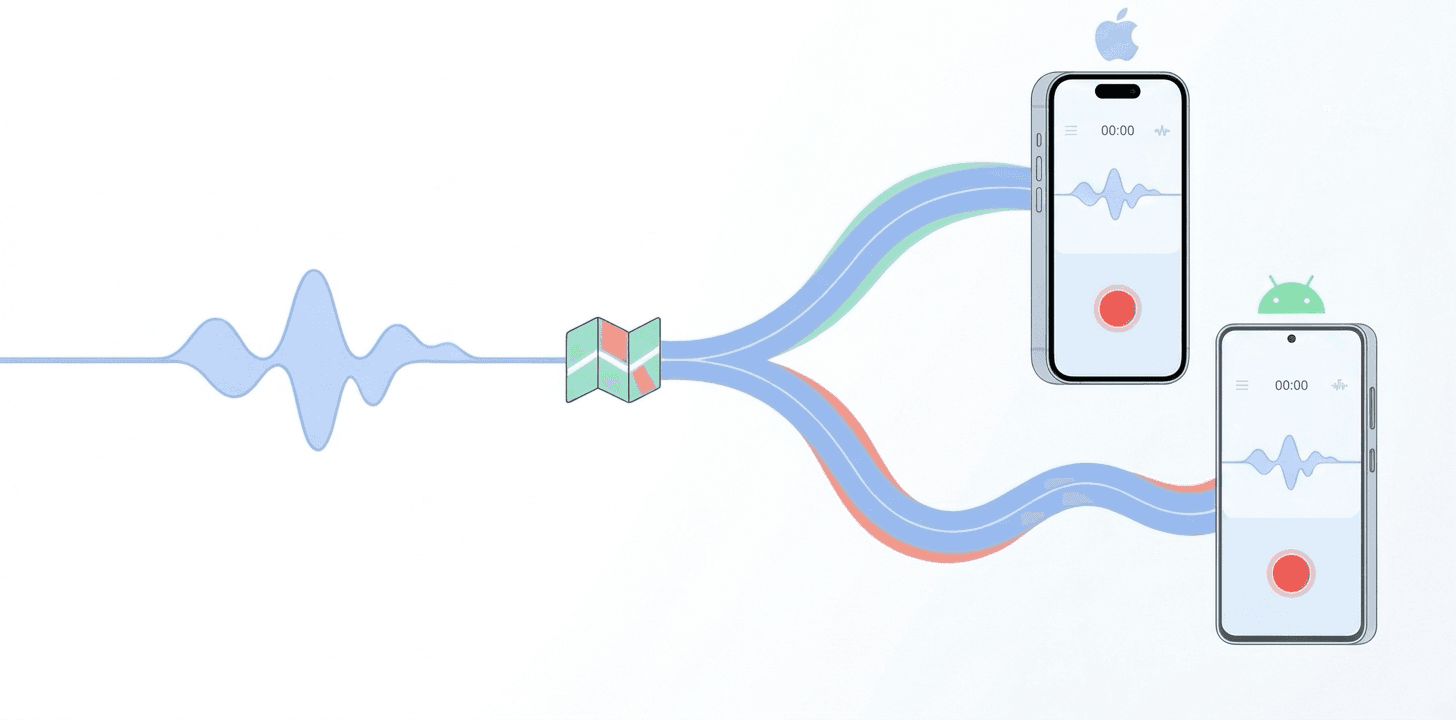
Wave AI has a new engine. We rebuilt the Wave mobile app from scratch in Swift on iPhone and Kotlin on Android, the languages Apple and Google built their platforms around. Both are live today: Wave for iPhone on the App Store and Wave for Android on Google Play.
You don't need to do anything. It arrives as a normal update to the app you already have. You stay signed in, and your recordings, folders, people and settings are all still there.
Here's why we did it and what it means for you.
One App, Two Phones
Until now, Wave ran on React Native. React Native is a layer that sits on top of Swift and Kotlin. You write the app once, and it translates that one app onto iPhone and Android.
For a small team, that's a big deal. Wave has been built mostly by one person, me, and React Native meant I could build one app and ship it to both stores. It's a big reason Wave got to where it is as quickly as it did.
Close, but Not Quite
Translation layers have a cost, and you feel it.
- Performance. Every tap and scroll passes through an extra layer before it reaches your phone. Most of the time you won't notice. On long recordings, big libraries and older phones, you do.
- Feel. A React Native app looks like an iPhone app or an Android app, but it doesn't always behave like one. Scrolling, keyboards, sheets, back gestures and animations are a little different from what your phone does everywhere else. It's hard to name, but you notice it.
- Android most of all. React Native gets close on iPhone. On Android it's further off, and thousands of you on Android have told us so, in reviews, support chats and feedback. You were right.
We always knew the fix: build each app natively. The reason nobody does that at our size is that it means building and maintaining two separate apps, and keeping them in step forever. For a solo developer, that used to be out of reach.
What Changed
AI changed it.
With modern AI coding tools, building and maintaining two native apps is no longer the wall it used to be. The hard part of going native was never knowing what to build. It was the sheer amount of work of building everything twice, testing it twice and keeping both versions identical. That work is now something I can take on.
So we rebuilt Wave from the ground up, screen by screen, on both platforms. Thousands of automated tests check that each app behaves the way Wave always has. We're not the only ones making this call. Shopify, which helped make React Native popular, announced the same move this fall, for many of the same reasons.
What It Means for You
- Same Wave. Every feature you use today is in the new app: recording, phone calls, imports, transcripts, summaries, chat, folders, sharing, Voice ID and widgets.
- Same account, same recordings. It installs over the app you have. No new download, no signing in again, nothing to move.
- Faster and smoother. It opens faster, scrolls smoothly through big libraries, and long transcripts stay responsive.
- It feels like your phone. On iPhone, Wave behaves like an iPhone app. On Android, it behaves like an Android app. Gestures, keyboards, menus and haptics all work the way you expect.
- Same features on both. Going native doesn't mean one phone falls behind. iPhone and Android stay on the same feature set, and new features ship to both.
Get It Now
The new Wave is live on the App Store and Google Play. Updates roll out in stages, so if you don't see it yet, it's on its way. New to Wave? Download it here.
Try it, and tell us what you think. Reply to any Wave email or message us in the app. After years of hearing “it's great, but it doesn't feel quite right on my phone,” I'm excited for you to see it.
Josh
Learn more about Wave
Try Wave free — record, transcribe, and summarize on your phone.